
If you’re thinking about replacing the windows on your home or property, you might be considering uPVC. Durable, long-lasting, and stylish, these are a popular choice. But just how long-lasting are they? Well, the exact lifespan will depend on a number of factors, like the quality of the windows and the installation itself, and over time, uPVC windows can become less efficient or begin to show signs of wear. So how long do uPVC windows last?
How long should uPVC windows last?
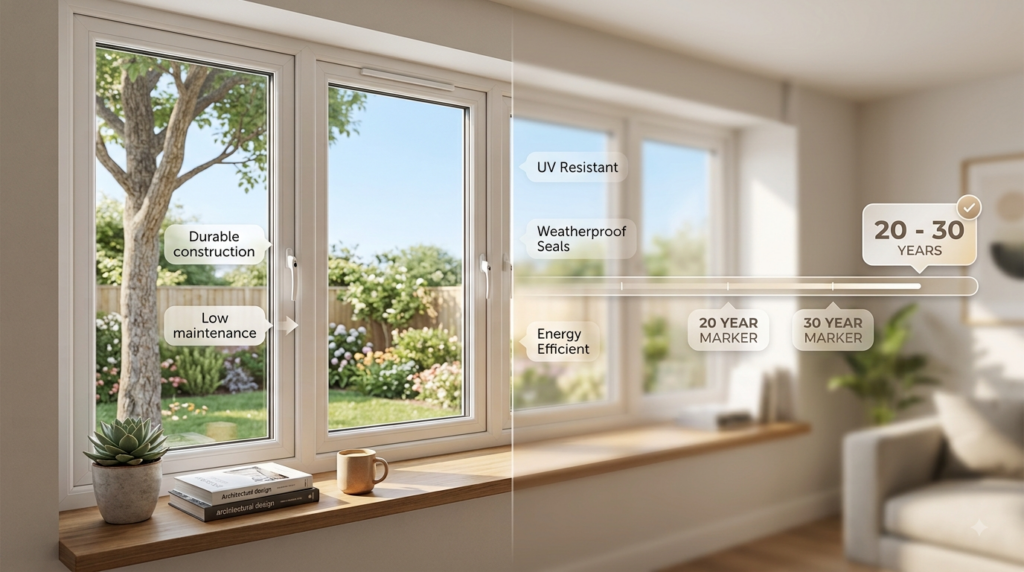
Most good-quality uPVC windows can last between 20 and 30 years, although some may continue to perform well beyond this with proper care. However, the exact lifespan you can expect from your windows will depend on a variety of factors, including:
- The quality of the uPVC and other materials used
- The standard of installation
- Exposure to sunlight, wind and rain
- How often the windows are used
- The level of maintenance they receive
Well-maintained windows that have been correctly installed are generally more likely to reach the upper end of their expected lifespan.
What can affect the lifespan of uPVC windows?
Although uPVC is a durable material, windows are exposed to the elements throughout the year. This constant exposure to rain, sunlight and changing temperatures for example, can eventually cause components to deteriorate.
The hinges, handles, locks, seals and other moving parts can also wear over time, particularly on windows that are opened and closed frequently.
Poor installation can affect performance too. If windows have not been fitted correctly, problems such as draughts, sticking, water ingress or uneven operation may develop sooner than expected.
How do you know when uPVC windows need replacing?
There are a number of signs you should look out for that can indicate that your uPVC windows are no longer performing as they should. These include:
- Draughts around the window frames
- Condensation between panes of glass
- Windows that are difficult to open or close
- Damaged or deteriorating seals
- Cracks or visible damage to the frames
- Noticeable increases in outside noise
- Cold spots around the windows
If you notice several of these issues, it may be worth having your windows inspected to determine whether repairs are possible or replacement is more suitable.
Do uPVC windows need maintenance?
One of the advantages of uPVC windows is that they generally require relatively little maintenance compared with some other window materials. Regular cleaning is enough to keep the frames in good condition, while checking seals and moving parts can help identify potential problems before they become more serious.
It’s also important to avoid forcing windows that are difficult to operate, as this can put additional strain on the hinges, handles and locking mechanisms.
Are newer uPVC windows more energy efficient?
Older uPVC windows may not provide the same level of thermal performance as modern windows. Advances in glazing, frame design and window technology mean that newer windows can offer improved insulation and help reduce heat loss through the glass and frames.
If your existing windows are several decades old and you are experiencing draughts or cold rooms, upgrading them may improve both comfort and energy efficiency. However, the potential benefits will depend on the condition and performance of your existing windows, as well as the rest of your property’s insulation.
When should you replace uPVC windows?
There is no fixed age at which every uPVC window needs replacing. If your windows are still secure, operate properly and provide good levels of insulation, they may continue to be suitable even as they approach or pass 20 years old. Having said that, replacement may be worth considering if:
- The windows are regularly difficult to operate
- You can feel noticeable draughts around the frames
- The glazing has failed or is damaged
- The frames are cracked or badly deteriorated
- The windows are no longer providing the level of insulation you need
- You are spending more on repairs and maintenance
How can you make uPVC windows last longer?
Taking care of your windows can help maximise their lifespan. Some simple steps include:
- Cleaning the frames and glass regularly
- Keeping drainage channels clear
- Checking seals for signs of damage
- Lubricating suitable moving parts when required
- Avoiding excessive force when opening or closing windows
- Having damaged components repaired promptly
So how long do uPVC windows last?
uPVC windows typically last around 20 to 30 years, although their actual lifespan will depend on the quality of the windows, installation, weather exposure and maintenance.
For many homeowners, well-maintained uPVC windows can provide decades of reliable performance. If your windows are becoming difficult to operate, draughty or damaged, having them assessed can help you decide whether repairs or replacement are the most suitable option.