
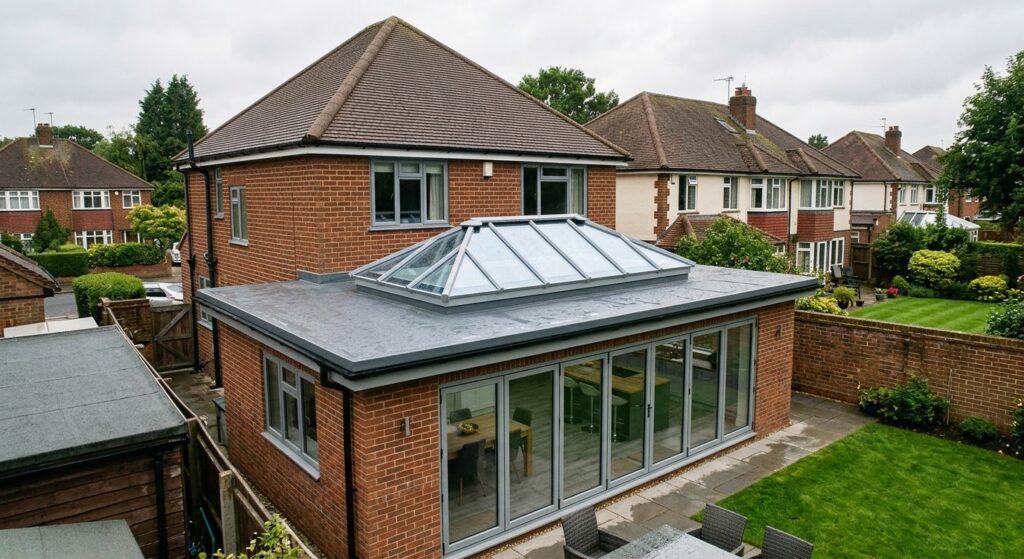
Roof lanterns are designed to be used on extensions, orangeries and other areas where a flat roof would restrict natural light from entering the space. These are made from glass, and are usually raised above the surface of the roof, creating a lantern-like shape that can allow light to fill the room. But what do you need to know before choosing a roof lantern?
So what is a roof lantern?
A roof lantern is a glazed, angled window that is installed on flat roofs to maximise the amount of light that enters the space.
How does a roof lantern work?
A roof lantern works by using multiple glazed panels positioned above a roof opening. The raised design allows sunlight to enter from different directions throughout the day. Roof lanterns also have a strong supporting frame, which also creates a weather-resistant seal between the roof lantern and the roof.
Where are roof lanterns used?
Flat roofed extensions are perfect for roof lanterns, where they can boost the amount of daylight available in the room below. Some of the most popular options include:
Kitchen extensions
Dining areas
Living rooms
Orangeries
Garden rooms
Home offices
What are the benefits of a roof lantern?
There are a number of benefits and advantages to installing a roof lantern including:
More natural light
A brighter and more welcoming room
A feeling of greater space
An attractive architectural feature
Potentially less reliance on artificial lighting during the day
A wide range of styles and finishes
Do roof lanterns need maintenance?
In general, roof lanterns require very little maintenance, but keeping them clean and checking for problems can help keep them looking and performing well over time. General maintenance can include:
Cleaning the glass
Checking the frame and seals
Keeping drainage areas clear
Checking for signs of damage
Inspecting the surrounding roof for any issues
What styles of roof lantern are available?
There are a number of design options available for roof lanterns, though they are typically made from materials such as uPVC, aluminium or other modern framing systems. The glazing options themselves also vary, with different choices providing different levels of thermal insulation and solar control. Some of the design options include:
Traditional roof lantern designs
Modern minimalist styles
Different frame colours
Various sizes and shapes
It’s important that you choose the design style that will best suit your property, and the aesthetic design you are aiming for.
Is a roof lantern suitable for every property?
A roof lantern can be suitable for a wide range of different properties, especially for flat roof extensions. However, the existing roof structure will need to be suitable for supporting the roof lantern and accommodating the necessary opening. A professional installer or builder can assess your roof and advise you on the most suitable option for your property.
Roof lanterns as part of a home improvement
A roof lantern can be one of several improvements used to make your extension more comfortable, attractive and practical. You may choose to combine a roof lantern with:
Energy-efficient windows
Bi-fold or sliding doors
Improved roof insulation
Efficient heating
Ventilation
Internal blinds or shading
Overall, a roof lantern is an effective way to introduce more natural light into an extension or flat-roofed room. When designed and installed correctly, it can combine an attractive appearance with practical benefits, helping you create a brighter and more enjoyable space.